
Polsinelli at Work Blog
- Policies, Procedures, Leaves of Absence & Accommodations
New York Requires Workplace Violence Prevention Plans for Retailers
On September 4, 2024, New York Governor Kathy Hochul signed the New York Retail Worker Safety Act (the “Act”) into law. The Act can be found here. The Act requires all employers in New York with 10 or more employees working at a retail store to prepare a workplace violence prevention plan by March 2025. The Act defines retail employers as “any person, entity, business, corporation, partnership, limited liability company, or an association employing at least ten retail employees… [at] a store that sells consumer commodities at retail and which is not primarily engaged in the sale of food for consumption on the premises.” These employers will need to have a written plan, along with corresponding training to be done at the time of hire and annually thereafter, to cover topics like risk factors, prevention, de-escalation, emergency procedures, etc. The plan will also need to be available for all employees and will need to be provided at the time of hire and annually thereafter in English and in the employee’s primary language if not English, and employers will need to maintain records related to workplace violence for at least 3 years. Additionally, under the Act, any retail employers with 500 or more employees nationwide will be required to install panic buttons or provide access to panic buttons through mobile devices for any New York locations. The panic button requirement must be satisfied by January 1, 2027. The Act also provides specific requirements for the panic buttons, including where they should be located, how they should work, etc. The Act tasks the New York Department of Labor (“NYDOL”) with preparing a model workplace violence prevention plan and corresponding training for employers to adopt if they wish. Employers may also prepare their own plans and trainings so long as they meet the requirements of the Act. Polsinelli will continue to monitor developments as the NYDOL issues model plans and training. New York retail employers should consult with their Polsinelli attorneys prior to March 2025 to review or prepare workplace violence prevention plans and trainings or with questions about how this Act may affect their business.
September 11, 2024
- Restrictive Covenants & Trade SecretsAugust 21, 2024
Texas Federal Judge Blocks FTC Non-Compete Ban
Yesterday, Judge Ada E. Brown of the U.S. District Court for the Northern District of Texas in Ryan v. The Federal Trade Commission upheld a challenge by business groups to the FTC’s non-compete ban. In addition to confirming her earlier ruling that the FTC non-compete ban was not a valid exercise of agency power, the judge also expanded the limited, temporary injunction entered on July 3, 2024 to hold unlawful and set aside the noncompete-ban in a ruling with a “nationwide effect” that is not limited to the parties in the lawsuit. In other words, the FTC’s non-compete ban will not take effect on September 4 for anyone. The Court concluded that: (1) the FTC lacked statutory authority to promulgate substantive rules concerning unfair methods of competition, i.e. the non-compete ban; and (2) the non-compete ban is arbitrary and capricious because it is “unreasonably overbroad without a reasonable explanation.” As a result, the Court found the non-compete ban to be an unlawful agency action. In deciding the appropriate relief, the Court relied on recent precedent from the Fifth Circuit to conclude its ruling must have a “‘nationwide effect,’ is ‘not party-restricted,’ and ‘affects persons in all judicial districts equally.’” Thus, the Court’s ruling prevents (1) the FTC from taking any action to enforce the non-compete ban against anyone; and (2) the FTC non-compete ban from taking effect on September 4, 2024—effectively vacating it. What happens next? In the wake of the ruling, the FTC’s spokesperson stated, “[The FTC is] seriously considering a potential appeal.” If the FTC decides to appeal, the decision would be reviewed by the U.S. Court of Appeals for the Fifth Circuit in New Orleans. Any decision rendered by the Fifth Circuit would likely be appealed to the U.S. Supreme Court—meaning the final fate of the FTC’s non-compete will be revisited and could change. Importantly, even though the FTC non-compete ban will likely not go into effect in the immediate future, the FTC still has the power in the interim under Section 5 of the FTC Act to pursue enforcement actions on a case-by-case basis. In reacting to the ruling, an FTC spokesperson stated, “Today’s decision does not prevent the FTC from addressing noncompetes through case-by-case enforcement actions.” If the FTC is to be taken at its word, it appears ready to amplify such enforcement actions in the future. The FTC’s posture could change after the November election depending upon the policies of the next administration. How should employers approach non-competes? Notwithstanding yesterday’s ruling, employers should still be mindful of the enforceability of their non-competes now and in the future. Several states have limited or outright banned the use of non-competes. The move by the FTC could spark additional state legislatures to revisit state-level restrictions as they return from recess and begin new legislative sessions this Fall. The U.S. Congress could also decide to enact legislation of its own; and, it’s conceivable that yesterday’s ruling will serve as a catalyst for Congress to revisit such legislation. Polsinelli attorneys are continually monitoring the evolving landscape of restrictive covenant law and are available to help you evaluate your use of non-competes and other restrictive covenants to protect competitive information.
- Class & Collective Actions, Wage & HourAugust 19, 2024
November Election Could Bring Changes to Missouri Wage and Leave Law
Missouri voters will decide in November whether to raise the state’s minimum wage and guarantee paid sick leave for workers. On August 13, 2024, Missouri Secretary of State Jay Ashcroft certified a ballot measure advanced by the Missourians for Healthy Families & Fair Wages. Proposition A proposes to guarantee that Missouri workers can earn up to seven paid sick days per year and would gradually raise the minimum wage to $15/hour. Proposition A asks: Do you want to amend Missouri law to: Increase minimum wage January 1, 2025, to $13.75 per hour, increasing $1.25 per hour each year until 2026, when the minimum wage would be $15.00 per hour; Adjust minimum wage based on changes in the Consumer Price Index each January beginning in 2027; Require all employers to provide one hour of paid sick leave for every thirty hours worked; Allow the Department of Labor and Industrial Relations to provide oversight and enforcement; and Exempt governmental entities, political subdivisions, school districts, and education institutions? Notably, Proposition A exempts federal, state and local governments, school districts, and educational institutions, among others, from its requirements. Proposition A also carves out numerous exceptions to the “employees” subject to the proposed amended statute, including government workers, non-profit volunteers or independent contractors, retail or service employees who work for a business that makes less than $500,000 per year, individuals who are incarcerated, golf caddies, and babysitters. If it passes, Proposition A would change Missouri law rather than the Constitution. Practically speaking, that means the Republican-controlled General Assembly could repeal the measure. However, the popularity of previous ballot initiatives raising the minimum wage curtailed action from the General Assembly. Therefore, if Proposition A passes by a large margin, the General Assembly may be reticent to repeal. Polsinelli will continue to monitor developments as the vote unfolds. If you have questions about the potential impact these amendments could have on your business or employees, contact your Polsinelli attorney.
- Policies, Procedures, Leaves of Absence & AccommodationsJuly 30, 2024
Mid-year Employment Law Updates and Webinar
Many state and local government employment laws go into effect this summer. Here is a non-exhaustive list of mid-year employment law updates. To hear a discussion on what you need to know from 2024 and more information about complying with these changing laws, regulations, and rulings, we invite you to register here for a webinar on September 26 from 1:00 PM to 2:00 PM ET. Contact your Polsinelli attorney if you have any questions or need assistance regarding employment law compliance for these legal updates.
- Restrictive Covenants & Trade Secrets
Pennsylvania Latest to Curtail Use of Non-Competes
Pennsylvania is joining the growing chorus of states codifying restrictions on the use of non-competes. On July 17, 2024, Pennsylvania Governor Josh Shapiro signed into law the Fair Contracting for Health Care Practitioners Act. Effective January 1, 2025, the Act limits the use of non-competes for health care practitioners and requires employers to provide notice to patients of a health care practitioner’s departure. In passing the Act, legislators intended to improve the attraction and retention of health care practitioners in Pennsylvania and limit the negative impacts of non-competes in the healthcare industry. With specific regard to the types of prohibited covenants, the Act renders void and unenforceable any “noncompete covenant” between an employer and health care practitioner “which has the effect of impeding the ability of the health care practitioner to continue treating patients or accepting new patients.” That definition is arguably broad enough to encompass patient nonsolicitation provisions, although such provisions are not specifically referenced. The Act applies only to certain “health care practitioners”: medical doctors, osteopaths, nurse anesthetists, registered nurse practitioners and physician assistants. The Act also imposes patient notification requirements on all entities falling within the definition of “employer.” Following the departure of a health care practitioner, an employer must notify the health care practitioner’s patients seen within the past year of that: (1) the health care practitioner departed; (2) the patient may receive care from the departed health care practitioner or another health care practitioner, including how the patient can transfer records to another health care practitioner other than with the employer; and (3) the patient may be assigned to another health care practitioner within the employer. Finally, the Act does not restrict the ability of employers to enforce contractual provisions allowing an employer to recover reasonable expenses from a health care practitioner (1) directly attributable to the health care practitioner and accrued within three years prior to separation when the health care practitioner voluntarily separates from the employer; (2) related to relocations, training, and the establishment of a patient base; and (3) amortized over a period of up to five years from the date of separation by the health care practitioner. Importantly, the Act does not restrict: Non-competes one year or less in duration if the health care practitioner voluntarily separates from the employer; or Non-competes executed prior to January 1, 2025. With regard to the non-competes entered in the context of a sale of a business, the Act does not apply to non-competes connected to (1) the sale of a health care practitioner’s ownership interest in an entity or all or substantially all of the assets of the business entity; (2) transactions resulting in the sale, transfer, or change in control of the business entity; or (3) a health care practitioner’s receipt of an ownership interest in the business entity. Employers should consult with their Polsinelli attorneys in advance of the January 1, 2025, effective date of the Act to review and assess their agreements with health care practitioners, as well as compliance with the Act’s patient notice requirement.
July 29, 2024
- Restrictive Covenants & Trade SecretsJuly 24, 2024
Pennsylvania Court Keeps FTC Non-Compete Ban on Life Support
Yesterday (July 23), a Pennsylvania judge—in ATS Tree Services, LLC v. Federal Trade Commission—upheld the legality of the FTC's non-compete ban. This ruling contradicts the ruling recently issued in a parallel proceeding in Texas. Earlier this month, a Texas judge—in Ryan, LLC v. Federal Trade Commission—temporarily enjoined the FTC’s non-compete ban from going into effect against the named plaintiff/intervenors. Although the Texas judge declined to implement a nationwide injunction, she signaled an intent to uphold the challenge to the non-compete ban in a future ruling based on her finding that the FTC had likely exceeded its statutory authority and a categorical ban on non-competes would be arbitrary and capricious. The ruling sides with the FTC, creating a divide in the judiciary on the scope of the FTC's regulatory powers and the legality of the FTC’s upcoming non-compete ban (scheduled to take effect on September 4). While the Court’s ruling partially denied a preliminary injunction based on a finding of no irreparable harm, the crux of the opinion held that plaintiff was unlikely to succeed in establishing that the FTC’s non-compete ban is unlawful. In so finding, the judge endorsed the FTC’s interpretation of its procedural and substantive rulemaking authority and concluded that the FTC has the authority to promulgate a rule that effectively bans non-competes nationwide. What comes next? While the Pennsylvania judge's decision provides a lifeline to the quickly approaching non-compete ban, the FTC's win may be short-lived. By August 30, the Texas judge intends to rule on the ultimate merits of the challenge to the non-compete ban, at which time she could issue more expansive, nationwide relief. Additionally, briefing is underway in a third challenge to the non-compete ban filed in Florida (Villages, Inc. v. Federal Trade Commission). It is expected that yesterday’s developments could spur additional legal challenges by employers. We will continue to monitor and report new developments. What should employers do now? Given the uncertainty of whether the FTC’s non-compete band will go into effect on September 4, employers should consult with counsel about their options and the appropriate steps and contingencies to explore in the interim.
- Restrictive Covenants & Trade SecretsJuly 03, 2024
Texas Federal Judge Partially Blocks FTC Ban on Non-Competes
On July 3, a Texas judge in the bellwether lawsuit, Ryan, LLC v. The Federal Trade Commission, became the first to weigh in on the legality of the FTC’s non-compete ban that is set to take effect on September 4. As was widely anticipated, the Court concluded that a preliminary injunction was appropriate, and it temporarily enjoined the non-compete ban from going into effect against the named plaintiff/intervenors to the Ryan lawsuit. Less anticipated, the Court declined to issue a nationwide injunction to non-parties—meaning that the FTC’s non-compete ban currently remains set to take effect on September 4 for all employers who are not named parties in the Ryan lawsuit. In reaching its conclusion, the Court held that the FTC’s rule banning most non-competes is likely unlawful for two reasons: (1) the FTC likely exceeded its statutory authority because it does not have substantive rulemaking authority to craft rules regarding unfair methods of competition; and (2) a categorial ban on nearly all non-competes would likely be arbitrary and capricious because it is overly broad without any reasonable explanation. While these findings are a clear rebuke of the FTC’s actions, the Court expressed doubt about whether it would be appropriate for it to issue a nationwide injunction that would extend to non-parties because such relief is unnecessary to protect the interests of the named parties (which is the focus at the preliminary injunction stage). The implications of this ruling are going to evolve over the next two months. The Court has ordered the parties to submit a joint status report by July 9 to determine the case’s next steps, and it has committed to issuing a final decision on the merits of the entire lawsuit by August 30. This forthcoming merits-based decision could result in a more expansive nationwide injunction that would extend to non-parties; however, many employers may view this as providing little reprieve in the interim because of the anticipated rulings timing with the looming September 4 effective date and actions needed to prepare for that effective date. For now, employers will need to revisit how they intend to approach the FTC’s Final Rule in the days leading up to September 4. Attention will also likely shift to the parallel lawsuit in Pennsylvania, ATS Tree Services, LLC v. The Federal Trade Commission, which leaves open the possibility of a nationwide injunction still being issued by that Court later this month.
- Discrimination & HarassmentJune 25, 2024
No Harm, No Foul: The Supreme Court Reduces “Harm” Standard for Discriminatory Job Transfer Claims under Title VII
In April, the U.S. Supreme Court unanimously held in Muldrow v. City of St. Louis, that to sustain a prima facie case of employment discrimination under Title VII of the Civil Rights Act of 1964 (“Title VII”), plaintiffs do not have to show that a discriminatory transfer to another position caused “material” or “significant” harm to the plaintiff; rather plaintiffs only have to show that “some” harm occurred because of the job transfer. In its opinion, the Court did not explicitly articulate how “some” harm is defined. Regardless, the reduced “harm” standard will invariably increase the number of claims that survive early dismissal at the trial court level. Indeed, Justice Kavanaugh opined that a plaintiff “should easily be able to show some additional harm – whether in money, time, satisfaction, schedule, convenience, commuting costs or time, prestige, status, career prospects, interest level, perks, professional relationships, networking opportunities, effects on family obligations, or the like.” Pre-Muldrow, federal circuits disagreed on how much harm a plaintiff must show to have suffered an actionable “adverse employment action” under Title VII. Some circuits previously held that no showing of harm necessary beyond the discriminatory act itself was required, while other circuits generally applied a heightened standard of harm for claims to be actionable under Title VII. Post-Muldrow, employers will be forced to grapple with a lowered, undefined standard of “harm,” which will likely require additional litigation to sort out. Further, while the Court’s holding was focused on job transfers, the decision might encourage employees to challenge other types of employment actions, (i.e., scheduling changes, work assignments, training and mentorship, or other opportunities) in an attempt to lower the legal standards for actionable discrimination claims altogether. However, it is not time to panic (yet). Employers still have the well-known defense in their arsenal that the job transfer was made for legitimate, non-discriminatory reasons. As such, thorough documentation for the reasons supporting an employee’s job transfer have just become even more critical to shield employers from increased discrimination claims under Title VII. Contact your Polsinelli attorney to ensure your policies, programs, and employment decisions are structured to mitigate increased risk surrounding the new Muldrow job transfer standard.
- Class & Collective Actions, Wage & Hour
California Governor Reaches Deal With Business Leaders on PAGA Reform
California Governor Gavin Newsom, alongside business leaders, and legislators, announced a significant agreement to reform the state's Private Attorneys General Act (PAGA). PAGA, initially enacted to allow employees to stand in the shoes of the Attorney General and file lawsuits against employers for labor code violations, has been subject to immense exploitation in the filing of frivolous lawsuits seeking quick settlements. The recent agreement aims to address these concerns by introducing changes to foster a manageable and fair litigation process. While the exact language of the amended law has not been revealed yet, key aspects of the new legislation have been published on the Governor’s website. First, penalties for potential violations will be capped for employers who quickly rectify policies and practices and make workers whole after receiving a PAGA notice. Relatedly, the reformed statute will expand the range of Labor Code sections that can be cured by employers. This encourages employers to take prompt and responsible actions to comply with labor laws, before a lawsuit is initiated and before the attorney fees for employees’ attorneys are triggered. Additionally, courts will be equipped by statute to (1) strike PAGA claims that are unmanageable due to size or scope; and (2) require plaintiffs that bring a PAGA action to have personally experienced the Labor Code sections claimed to have been violated. The manageability and standing requirements will provide tools and defenses for employers to dismiss meritless claims. Overall, the PAGA reform represents a potential first step towards a more balanced and equitable approach to labor law enforcement in California. The reform package has received support from business groups and labor organizations, highlighting its balanced approach. The capping of penalties, expanded ability to cure violations, and requirement of manageable claims that plaintiff themselves experienced, should reduce frivolous claims and litigation costs. We will continue to provide updates as the language of the amended PAGA statute becomes available.
June 21, 2024
- Government ContractsJune 07, 2024
OFCCP Issues Corporate Scheduling Announcement List for FY2024
On June 7, 2024, the Office of Federal Contract Compliance Programs (OFCCP) released its first Corporate Scheduling Announcement List (CSAL) for fiscal year 2024. Specifically, this list identifies around 500 federal supply and service contractors and subcontractors that will be audited. The CSAL can be found here and the OFCCP answers to CSAL-related questions can be found here. Of the 500 contractors and subcontractors identified, 440 are establishment-based reviews, 30 are corporate management compliance evaluations (CMCE) focused on the contractor’s headquarters, 24 are functional affirmative action plan (FAAP) reviews, and 6 are university reviews. The release of the CSAL does not indicate that audits are beginning but rather, informs contractors and subcontractors that they have been identified for audit. This allows contractors and subcontractors advance notice and can be very helpful in providing time to prepare for the audit, gather data and documents necessary for the audit, and identify any potential issues that may need to be addressed before or during the audit. Before formally initiating an audit, OFCCP sends contractors and subcontractors a Scheduling Letter. Scheduling Letters are often issued around 45 days after the CSAL is released, and as such, it can be difficult and rushed for contractors and subcontractors to prepare for the audit. Polsinelli regularly represents federal contractors and subcontractors in OFCCP audits and is available for consultation with contractors and subcontractors identified in the CSAL.
- Government ContractsMay 31, 2024
2023 EEO-1 Reporting Deadline Upcoming and EEOC Files Suit to Enforce Compliance
Tuesday, June 4, 2024, is the deadline to submit and certify the 2023 EEO-1 Component 1 Report to the Equal Employment Opportunity Commission (EEOC). While the deadline has been extended occasionally in prior years, no such announcement has been made to date. Accordingly, all covered employers should take steps to comply by the deadline. The importance of meeting this annual reporting requirement was further emphasized this week when the EEOC filed suit against 15 employers in various industries across 10 states for failing to submit their EEO-1 Component 1 Reports for past years, including for the years 2021 and 2022. Additional information regarding reporting requirements and whether your company is required to submit and certify can be found here. Polsinelli will continue to monitor developments with EEO-1 reporting and the above-referenced EEOC lawsuits. If you have questions about EEO-1 reporting or need assistance preparing this report, contact your Polsinelli attorney.
- Restrictive Covenants & Trade SecretsMay 30, 2024
FTC Files Brief to Stave Off Challenge to Rule Banning Non-Competes
Yesterday (May 29), in Ryan, LLC et al. v. The Federal Trade Commission, the FTC filed its response in opposition to Plaintiffs’ request to stay/enjoin the FTC Rule banning non-competes from taking effect on September 4. The Court has committed to issuing a decision on Plaintiffs’ request no later than July 3. Consistent with commentary to the Rule, the main thrust of the FTC’s response argues it has authority to issue the Rule pursuant to the Federal Trade Commission Act’s directive that Congress “empowered and directed” the FTC to prevent the use of unfair methods of competition through rulemaking. The FTC also devotes significant briefing to dispelling the application of the “major questions doctrine” to curtail its regulatory ability. We anticipate the Court’s decision will most likely hinge on whether the Court applies the major questions doctrine – articulated in the U.S. Supreme Court’s 2022 decision in West Virginia v. Environmental Protection Agency – to grant a nationwide injunction enjoining the Rule. In the West Virginia decision, the Supreme Court found the EPA’s policy involved a “major question” and that the agency went too far in its attempt to regulate absent explicit permission from Congress to do so. The U.S. Court of Appeals for the Fifth Circuit employed that same rationale to affirm a preliminary injunction blocking enforcement of President Biden’s COVID-19 federal contractor vaccine mandate. The Fifth Circuit’s decision likely drove the filing of the two lawsuits challenging the Rule in Texas federal courts, which sit in the Fifth Circuit. Plaintiffs' reply briefs are due June 12. Your Polsinelli Restrictive Covenant and Trade Secret Group will continue to monitor these cases and will keep you updated with any major litigation developments.
- Restrictive Covenants & Trade Secrets
Fireworks Are Coming Before Independence Day
Mark your calendars for July 3—the date we will likely learn whether a Texas Court will enjoin the FTC Rule banning non-competes from taking effect on September 4. This week, Judge Ada Brown, the presiding judge in Ryan, LLC v. The Federal Trade Commission, issued a series of Orders that require all briefing on the request to stay/enjoin the FTC Rule to be completed by June 12. The Court will then announce by June 13 whether it will make a decision based on the parties’ briefing or conduct a hearing, which would take place on June 17. Under either scenario, the Court has committed to issuing a decision by no later than July 3 on the request to stay/enjoin the FTC Rule from going into effect. To recap, to date, three lawsuits have been filed challenging the legality of the FTC’s Final Rule banning non-competes. The initial two cases—Ryan and a separate lawsuit filed by the U.S. Chamber of Commerce—were filed in Texas. This past week, the Judge in the U.S. Chamber lawsuit issued a stay of that case to prevent parallel litigation of overlapping claims and issues under the first-to-file doctrine, which gives priority to the first lawsuit filed—i.e., Ryan. This effectively stops the U.S. Chamber lawsuit from proceeding further. The U.S. Chamber has since filed an unopposed motion to intervene/join in the Ryan lawsuit, which the Court granted today (May 9). In turn, the U.S. Chamber will continue to play an active role in challenging the legality of the FTC Rule in cooperation with Ryan, LLC in the first-filed lawsuit and Ryan is poised to be the first of many judicial opinions that will address the legality of the FTC Rule and will serve as a bellwether on this important issue. Your Polsinelli Restrictive Covenant and Trade Secret Group will continue to monitor these cases and will keep you updated with any major litigation developments.
May 09, 2024
- Hiring, Performance Management, Investigations & TerminationsMay 08, 2024
Maryland Joins Trend Requiring Salary and Wage Disclosures in Job Listings
Effective October 1, 2024, Maryland will become the sixth state (plus the District of Columbia), to require that employers provide an upfront disclosure of the wage or salary range for open positions in job listings. The new law follows a recent proposed rule similarly seeking to require federal contractors to disclose pay information in job postings. These proliferating pay transparency requirements demonstrate the need for employers to continue focusing on achieving pay equity throughout the workforce. Maryland’s law is applicable to all employers within the state, regardless of size, and applies to any position that will be physically performed, at least in part, in Maryland. As with transparency laws enacted by other states, this leaves uncertainty about the law’s application to fully remote positions that can conceivably be performed from anywhere. The new law requires that employer job listings, whether posted directly or through a third party like a recruiting firm, include a wage and salary range, as well as a general description of the benefits offered for the position. The wage or salary range must be set in good faith by reference to: (1) Any applicable pay scale; (2) Any previously determined minimum and maximum hourly rate or minimum and maximum salary for the position; (3) The minimum and maximum hourly rate or minimum and maximum salary of an individual holding a comparable position at the time of the posting; or (4) The budgeted amount for the position. The law also applies to internal postings for promotions or transfers. If this information is not included in a job posting, it must be provided to the applicant before any discussion of compensation takes place, or earlier upon the request of the applicant. Notably, the factors that must be referenced in setting the wage range could potentially be inconsistent – for example, an employer could be hiring for a position in which comparable employees make between $80,000 and $120,000 but have $100,000 budgeted for the hire. The law does not provide guidance on how employers should navigate such discrepancies. In addition to the job posting requirements, the law sets forth anti-retaliation and recordkeeping obligations for employers. Penalties for violation of the new law range from $300 to $600 and take effect only upon a second or subsequent offense, as the law provides that employers will receive a compliance warning for a first offense. The law is enforceable only by the Maryland Department of Labor and does not contain a private right of action. Employers with jobs that can be performed, at least in part, in Maryland should review their pay equity and transparency practices in light of this new law. If you have questions about pay equity and pay transparency practices, contact your Polsinelli attorney.
- Discrimination & HarassmentMay 01, 2024
Equal Employment Opportunity Commission Issues Final Guidance on Workplace Harassment
On April 29, 2024, the Equal Employment Opportunity Commission (“EEOC”) issued final guidance on workplace harassment. The guidance is effective immediately and is the first time the EEOC has updated its workplace harassment guidance since 1999. It reflects changes in the law in the last two decades, including making clear that federal law prohibits discrimination on the basis of sexual orientation and gender identity. The guidance provides an overview of anti-harassment laws but does not change legal requirements currently applicable to employers. While the guidance is not law and not binding on a court, it is intended to serve as a resource for employers, employees, and others, and provides insight into how the EEOC views various topics related to workplace harassment. Employers should review the guidance because it provides 75+ examples, as well as other information, that can be helpful in understanding the nuances of anti-harassment laws. For example, the guidance notes that “[n]ot all harassing conduct violates the law, even if it is because of a legally protected characteristic,” and it provides several examples of unlawful harassment. The guidance also covers topics such as establishing causation, hostile work environment, liability for harassment claims, and remote work. If you have any questions about workplace harassment, contact your Polsinelli attorney.
- Restrictive Covenants & Trade Secrets
Lawsuits Filed Challenging the FTC’s Final Rule Banning Non-Competes
To date, three lawsuits have been filed challenging the legality of the FTC’s Final Rule banning non-competes. The initial two cases were filed in Texas federal court, which is widely viewed as a more hospitable forum for attacks on the Rule. The third case was filed in Pennsylvania federal court, possibly for the strategic purpose of creating a circuit split to enhance appellate options. The first, Ryan, LLC v. Federal Trade Commission, was filed within hours of the April 23 vote approving the Rule for publication in the Federal Register. According to its pleadings, the plaintiff, Ryan, LLC, is a global tax services firm that uses non-competes in its shareholder agreements and with some employees “who have access to particularly sensitive business information.” The Complaint seeks a judgment vacating the Rule, declaring that the FTC does not have the authority to issue the Rule, declaring the Rule is unconstitutional, and declaring that the FTC is unconstitutionally structured. The Court’s docket reflects a “Court Request for Recusal” and no attorney has entered an appearance on behalf of the FTC—indicating the case may not move as quickly unless or until a request for an injunction of the Rule is made by Ryan, LLC. The full case citation is Ryan, LLC v. Federal Trade Commission, 3:24-cv-986, United States District Court for the Northern District of Texas, filed April 23, 2024. The second case was filed the day following the FTC’s vote and is led by the U.S. Chamber of Commerce. Unlike the Ryan case, the Chamber has moved for a preliminary injunction to prohibit the FTC from enforcing the Rule and postponing the Rule’s effective date (120 days from its forthcoming publication in the Federal Register). The Court has determined that the case “presents only legal disputes about agency action” and no discovery is required. As a result, the Court consolidated the trial on the merits of the Chamber’s claims with the injunction hearing, which will occur on a to-be-determined date shortly after the completion of the parties’ briefing on June 19, 2024. District Judge J. Campbell Barker specifically noted that the scheduling order will allow sufficient time to resolve and appeal the issues before the Rule’s effective date. The full case citation is Chamber of Commerce for the United States of America et al. v. Federal Trade Commission et al., 6:24-cv-00148, United States District Court for the Eastern District of Texas, filed April 24, 2024. The third case was filed a day later (April 25) by a smaller company, ATS Tree Services, LLC, which only employs 12 people, and seeks similar injunctive relief. Unlike the Texas cases, the ATS lawsuit places a greater emphasis on the necessity of non-competes to safeguard specialized training and names all five FTC commissioners as defendants. No attorney has yet entered an appearance on behalf of the FTC or its commissioners nor has the Court entered a docket control order—meaning it’s likely this case will not move as quickly as the U.S. Chamber lawsuit. The full case citation is ATS Tree Services, LLC v. Federal Trade Commission, et al., 2:24-cv-1743, United States District Court for the Easter District of Pennsylvania, filed April 25, 2024. While other lawsuits against the FTC and its commissioners trickle in, it’s likely the U.S. Chamber’s lawsuit will take the lead. Your Polsinelli Restrictive Covenant and Trade Secret Group will continue to monitor these cases and will keep you updated with any major litigation developments.
April 30, 2024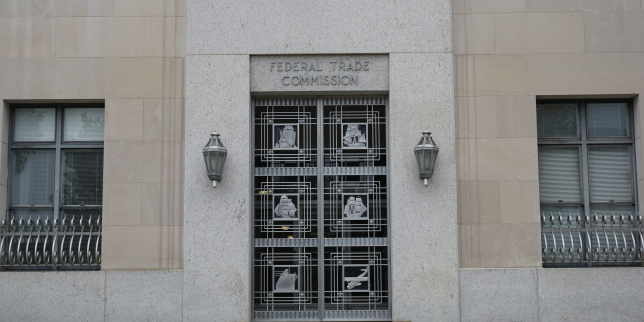
- Restrictive Covenants & Trade SecretsApril 24, 2024
FTC Final Rule Banning Most Non-Competes Passes – What You Need to Know
On April 23, 2024, the Federal Trade Commission (“FTC”) conducted a special Open Commission Meeting to vote on a Final Rule (the “Rule”) banning most non-compete clauses as an “unfair method of competition.” By a vote of 3-2, the Rule was approved for publication in the Federal Register. The Rule becomes effective 120 Days from Publication in the Federal Register (the “Effective Date”). Here is what you need to know: What clauses are impacted by the Rule? The Rule defines a prohibited “non-compete clause” to include any contract term, workplace policy, or term or condition of employment, written or oral, that prohibits a worker from, penalizes a worker for, or functions to prevent a worker from seeking work, accepting work, or operating a business after prior employment ends. Other types of post-employment covenants (e.g., non-solicitation) could be attacked under the Rule if they have the effect of a non-compete. What employers and workers are impacted by the Rule? Generally, the Rule will impact all employers other than certain banks, savings and loan companies, non-profits, and common carriers, which are not subject to the FTC’s authority by law. The Rule applies to paid and unpaid workers, including employees, independent contractors, externs, interns, volunteers, apprentices, and sole proprietors. The Rule does not apply to the franchisee in a franchisor relationship. What conduct is prohibited by the Rule? The Rule prohibits employers from (1) entering into or attempting to enter into a non-compete clause, (2) enforcing or attempting to enforce a non-compete clause, and (3) representing that a worker is subject to a non-compete clause. The Rule applies to non-compete clauses entered before the Effective Date unless the non-compete clause is with a “Senior Executive”. The exception for “Senior Executives”: Unlike the proposed rule, the final version of the Rule provides an exception for non-compete clauses entered into with Senior Executives before the Effective Date. A Senior Executive means a worker receiving total annual compensation (excluding fringe benefits) of at least $151,164 in the preceding year, and was “in a policy-making position”—meaning the entity’s president, CEO, officer, or other person who has final authority to make policy decisions that control significant aspects of the entity (and not just a subsidiary or affiliate). The exception for “bona fide sales of business”: The Rule does not apply to non-compete clauses entered into “pursuant to a bona fide sale of a business entity, of the person’s ownership interest in a business entity, or of all or substantially all of a business entity’s operating assets.” The Rule does not limit this exception to only those holding at least 25% ownership interest in a business, like the proposed rule did. What does the Rule require employers to do now? On or before the Effective Date (unless the Rule is enjoined), employers are required to provide all workers with impacted non-compete clauses clear and conspicuous notice to the worker that the non-compete clause will not be, and cannot be, legally enforced against the worker. The notice must be provided in writing by hand deliver, mail, email or text message, and group communications are permissible. The Rule provides model notice language. What happens to existing lawsuits? The Rule does not apply to causes of action related to non-compete clauses that have accrued prior to the Effective Date. Put another way, the Rule likely will not change cases involving alleged violations of non-compete clauses occurring before the Effective Date. What do we expect next? Lawsuits challenging the Rule were filed within hours of the vote, including a lawsuit filed in the United States District Court for the Eastern District of Texas by the U.S. Chamber of Commerce. Given the scope of the Rule and its impact, it is anticipated that at least some courts will enjoin the Rule from taking effect until the U.S. Supreme Court has an opportunity to weigh in on the Rule’s validity and constitutionality. Is there still risk when hiring a competitor’s employees? Yes. The Rule does not take effect for months and may never take effect if the court challenges are successful. The Rule also does not apply to conduct occurring before the Effective Date, so actions taken now still have risk. More importantly, the Rule generally does not eliminate all risk to hiring employees from a competitor because even without non-compete clauses, employers can bring suit based on other contract terms (non-solicitation and non-disclosure clauses), trade secrets, and legal theories to protect their interests when former employees go to work for a competitors. Contact your Polsinelli attorney if you need guidance reviewing your non-compete agreements or strategy around restrictive covenants.
- Class & Collective Actions, Wage & HourApril 23, 2024
Finally Final — The DOL Issues Its Long-Expected Final Rule Raising the FLSA Overtime Exemption Salary Thresholds
As has been expected, and as we addressed at the end of 2023 in our previous blog post, on April 23, the U.S. Department of Labor (“DOL”) at long last issued its final rule raising the salary thresholds for overtime exemptions. The rule, “Defining and Delimiting the Exemptions for Executive, Administrative, Professional, Outside Sales and Computer Employees,” addresses the scope of the carveout for positions deemed to be exempt from the overtime requirements of the Fair Labor Standards Act (“FLSA”). Specifically, the final rule sets into motion increases in the salary threshold that must be met for a position even to be potentially exempt. The salary thresholds are higher in the final rule than they were in the proposed rule. Beginning July 1, 2024, the salary threshold will increase to $43,888/year from the current level of $35,568/year. Following that, the threshold level will increase to $58,656/year on January 1, 2025. The January 2025 level equates to $1,128/week. The DOL has said that the increased threshold beginning January 1, 2025, will affect some 3 million workers. In addition to the general salary exemption thresholds, the rule will raise the threshold for classification as a highly compensated employee, from the current $107,432 to $132,964 in July 2024 and then to $151,164 in January 2025. This will not be the last increase – the rule sets forth that automatic updates to the threshold amounts will take place every three years based on the latest earnings data. As has been the case with previous attempts at increases through DOL rules, we anticipate there will be challenges to the rule. Finally, the rule will not alter the duties necessary for the exemption qualification of a position. And employers should remember that some states have higher salary thresholds for exemption under their state wage-and hour laws. Contact your Polsinelli attorney for further guidance regarding this rule change and other wage-and-hour matters.
- Restrictive Covenants & Trade SecretsApril 18, 2024
Vote Scheduled for FTC Final Rule Banning Non-Competes – What You Need to Know
FTC Final Rules Banning Non-Competes Vote Next Tuesday As you know, last year, the FTC issued a proposed rule banning virtually all non-compete agreements (which does not include non-solicitation agreements, confidentiality agreements and the like). Yesterday, the FTC announced that a special Open Commission Meeting will be held virtually on Tuesday, April 23, 2024, at 2 p.m. EDT at which time the FTC is expected to vote on a Final Rule. Here is what you need to know for now: When is the vote on the Final Rule to ban non-competes? Tuesday, April 23, 2024 at 2 p.m. EDT. The Open Commission Meeting will be available to view here. What is expected to happen? The consensus among Polsinelli’s Restrictive Covenant and Trade Secret Practice Group, other experts, and scholars is that the FTC will vote to implement a Final Rule substantially similar to the Proposed Rule. In short, that means that it will vote to ban essentially all non-competes with limited exceptions (some form of ownership in the entity being sold – the Proposed Rule had a 25% threshold). When will the Final Rule be effective? The Final Rule is expected to become effective 60 days after publication in the Federal Register. (The FTC has the ability to implement the Final Rule sooner if necessary due to an “emergency situation” but we do not anticipate that in this instance.) What can you do now? Understand that the vote will be Tuesday; that does not mean the Rule will be effective Tuesday. Understand that the Rule likely will not be effective until 60 days after publication in the Federal Register and that we anticipate that there will be litigation seeking to block the Rule from going into effect, as discussed below. Evaluate your use of non-competes, and develop strategies for navigating the uncertainties of the time. Strategically and thoroughly analyze your trade secret protocols and protections. What do we expect next? Experts and scholars (and we) fully expect the Final Rule will be challenged in Federal Court with the challenging parties seeking immediate injunctive relief preventing implementation of the Final Rule, based upon the FTC exceeding its authority. Contact your Polsinelli attorney if you need guidance reviewing your non-compete agreements or strategy around restrictive covenants.
- Policies, Procedures, Leaves of Absence & Accommodations
The EEOC Issues its Final Rule about the Pregnant Workers Fairness Act
On April 15, 2024, the EEOC issued its final rule regarding the implementation of the Pregnant Workers Fairness Act (the “PWFA”), a law that went into effect on June 27, 2023. The final rule will be officially published in the Federal Register on April 19th and will go into effect 60 days later. The EEOC proposed regulations regarding the PWFA and received over 100,000 comments on the proposed regulations. In light of these comments, the EEOC amended the rule to provide clarity for both employers and employees. These changes clarify that while the PWFA requires accommodations for limitations related to or arising out of “pregnancy, childbirth, or related medical conditions,” the EEOC will look to existing Title VII precedent in determining whether a limitation is related to or arises out of pregnancy, childbirth, or other related conditions. The final rule also provides specific examples of limitations that may arise, accommodations that should be provided, and leave as accommodation for appointments, recovery, etc. for pregnancy, recovery from childbirth, and loss of a pregnancy or child. In light of the EEOC’s final rule on the PWFA, employers should ensure their policies and procedures are up-to-date and that they understand any issues covered by this rule. If you have any questions about the requirements under this rule, contact your Polsinelli attorney.
April 16, 2024
- Government ContractsApril 01, 2024
2024 OFCCP Contractor Portal for Affirmative Action Plan Certification Opens April 1, 2024
The Office of Federal Contract Compliance Programs (OFCCP) announced that the Contractor Portal for federal contractors and subcontractors to certify compliance with their affirmative action plan (AAP) obligations will open on April 1, 2024, with contractors and subcontractors having until July 1, 2024, to submit the required certification. This is the third year of OFCCP’s annual certification requirement. Contractors must again certify that they have developed and maintained annual affirmative action plans for each of their workplace establishments or functional/business units, as applicable. Beginning last year, contractors and subcontractors were required to enter the start date of their currently maintained AAP. For the current 2024 certification period, contractors are certifying compliance for its most recent AAP start date. In addition, covered federal contractors must disclose the number of employees which are included in each establishment AAP. OFCCP continues to stress the need to meet this reporting deadline. The agency has indicated that contractors who fail to certify compliance (due to either failing to complete the certification or stating in the certification they have not complied) “will be more likely to appear on OFCCP’s scheduling list” for annual compliance audits. The certification requirement applies to existing federal contractors. OFCCP encourages new contractors to register as soon as possible after entering a contract and then update certification within 90 days of developing their AAP. Polsinelli assists many federal contractors and subcontractors in completing the Contractor Portal certification requirement and assists many entities doing business (directly or indirectly) with the federal government in determining whether they are subject to AAP obligations. Polsinelli’s OFCCP & Affirmative Action Plans practice is available to provide practical assistance to contractors and subcontractors with the certification process.
- Policies, Procedures, Leaves of Absence & Accommodations
What is 13th Month Pay and Why Should Employers Care?
Most American employers run payroll twelve or twenty-four times across a calendar year. In some countries, there is a “thirteenth month” to think about. In those jurisdictions, employers, customarily or by law, cut one more check (considered “thirteenth month” pay) as regular or bonus pay. In other places, salaries must be paid out across thirteen months, rather than twelve. As more workforces cross borders, these distinctions are difficult and yet vital to understand. These are the hotspots in the world for thirteenth month pay: Latin America: Mandatory thirteenth month pay is most prominent across Latin America. In practice, the date and method of payment can vary, but very few countries in Latin America do not have this requirement. Southern Europe: Spain, Portugal, and Greece require thirteenth month pay. Elsewhere, particularly in the south, it is merely customary to make this payment. For example, it is not required in Italy, but depending on the National Collective Agreement applied by an employer, an employee’s annual salary must be paid in either 13 or 14 installments. These installments do not represent an extra payment above the agreed salary. Asia and the Middle East: Some countries like the Philippines, Indonesia, and India require thirteenth month pay while it is merely customary in countries like Japan, China, Singapore, and the United Arab Emirates. Takeaway: The consequences of getting this wrong can surface in taxation and classification for multiple years. Polsinelli’s International Employment Law group monitors these requirements around the world and is available to assist with thirteenth month pay.
March 07, 2024
- Hiring, Performance Management, Investigations & TerminationsFebruary 28, 2024
Update: 2023 EEO-1 Reporting Opening Soon
On Tuesday, April 30, 2024, the Equal Employment Opportunity Commission (EEOC) will open the 2023 EEO-1 Component 1 Report for employers to report the race, ethnicity and gender of their employees. The EEO-1 reporting period is scheduled to remain open until Tuesday, June 4, 2024. This reporting is mandatory for private sector employees with 100 or more employees and certain federal contractors with 50 or more employees. In addition, employers with less than 100 employees who are related to other entities, such that combined, there are over 100 employees, may also be required to file. The EEOC anticipates posting updates regarding the 2023 EEO-1 Component 1 data collection by Tuesday, March 19, 2024, including the 2023 EEO-1 Component 1 Instruction Booklet and the 2023 EEO-1 Component 1 Data File Upload Specifications. Polsinelli will continue to monitor developments with the EEO-1 report. If you have questions about EEO-1 reporting or need assistance preparing this report, contact your Polsinelli attorney.
- Government Contracts
To Disclose or Not to Disclose: OFCCP to Appeal Adverse EEO-1 Report Disclosure Order
As previously reported, in late December 2023, the Northern District of California ordered OFCCP to release the EEO-1 reports of federal contractors it had previously withheld from production based on various exemptions under FOIA. The court set a February 20, 2024, deadline for OFCCP to do so. On February 15, 2024, the United States Attorney's Office representing OFCCP filed a Notice of Appeal, seeking judicial review of the Order. In conjunction with the appeal notice, the government is seeking a stay of the February 20, 2024, disclosure deadline pending the appeal. If the Ninth Circuit grants the stay, the EEO-1 reports will remain undisclosed for the time being, at least through the appeal process. Contact your Polsinelli attorney for further guidance regarding the appeal, any possible disclosure of the reports, and other government contractor matters.
February 16, 2024
- Retaliation & Whistleblower Defense
Supreme Court Rules Retaliatory Intent Not Required Under SOX
In a groundbreaking decision, the U.S. Supreme Court unanimously ruled today in favor of whistleblower Trevor Murray, dispelling the notion that whistleblowers must prove retaliatory intent to be protected under federal law prohibiting retaliation in the corporate finance space. The case centered around Murray, a former UBS employee, who fought to reinstate a $900,000 jury verdict he secured in 2017 after being fired for resisting pressure to alter his research on commercial mortgage-backed securities, in violation of the Sarbanes-Oxley Act (SOX). SOX regulates corporate financial reporting and recordkeeping and includes an anti-retaliation provision protecting whistleblowers. The case arrived at the Supreme Court because there was a split in the circuit court of appeals decisions as to whether a whistleblower was required to prove retaliatory to prevail on a SOX retaliation claim. The ruling today clarifies that treating an employee unfavorably due to protected whistleblowing activity violates SOX, regardless of the employer's motivations. The Court held, "When an employer treats someone worse—whether by firing them, demoting them, or imposing some other unfavorable change in the terms and conditions of employment—'because of' the employee's protected whistleblowing activity, the employer violates § 1514A." The Court further found that "it does not matter whether the employer was motivated by retaliatory animus or was motivated, for example, by the belief that the employee might be happier in a position that did not have [U.S. Securities and Exchange Commission] reporting requirements." If you have questions about how this decision impacts your business, contact your Polsinelli attorney.
February 09, 2024
- Restrictive Covenants & Trade SecretsFebruary 07, 2024
Upcoming Deadline to Notify California Employees Subject to Non-Competes
As we reported last month, effective January 1, 2024, non-compete agreements in California are unenforceable regardless of where the contract is signed. This means employees who sign non-competes outside California, then move to California and seek new employment in violation of the non-compete, can rely on California law to invalidate the non-compete. Practically speaking, this creates unpredictable challenges for employers with mobile or largely remote workforces. More importantly, AB 1076 makes it unlawful for employers to include a non-compete clause in an employment contract or require an employee to enter a non-compete. Any employer who uses, or attempts to use, a non-compete with employees working in California can now be sued by those employees, and the law entitles the employee to an injunction, damages, and attorneys’ fees in the lawsuit. In addition, by February 14 – next week – employers must provide notice to any current or former employee employed after January 1, 2022, that their non-compete clause or non-compete agreement is void. This notice must be individualized and, in writing, sent to the employee’s last known mailing and email address. Employers who fail to provide the required notice on time may be assessed a civil penalty of up to $2,500 per violation. Members of Polsinelli’s Restrictive Covenant and Trade Secret Practice Group are available to assist employers in mitigating the risks of using non-competes and other restrictive covenants with employees.
- Class & Collective Actions, Wage & Hour
New York to Consider Rolling Back Liquidated Damages for Pay Frequency Violations
New York Governor Kathy Hochul’s proposed budget for fiscal year 2025 includes proposed legislation that would amend New York Labor Law to make clear that liquidated damages are not available as a remedy for certain pay frequency violations. The legislation would align with a recent New York Appellate Division case that found there was no private right of action for pay frequency claims. New York’s weekly pay law provides that absent authorization from the Commissioner of Labor, employers must pay a “manual worker” (workers who spend 25% or more of their working time engaged in physical labor) weekly and no more than seven days after the end of the week in which the wages were earned. In 2019, a decision from the New York Appellate Division held that New York’s weekly pay law provided for a private right of action for plaintiffs and allowed plaintiffs to seek liquidated damages equal to the amount of the late-paid wages. This decision resulted in an increase in class action litigation by employees and former employees for allegedly late paid wages, even if paid in full. Previously, only the New York Department of Labor could bring such claims. Many of these new lawsuits involved facts where the employees were paid in full, but on a semi-monthly or monthly basis, rather than weekly. The proposed legislation would amend New York’s weekly pay law to make clear that liquidated damages are “not applicable where the employee was paid in accordance with agreed terms of employment” and paid not less frequently than semi-monthly. The legislation is in line with a recent 2024 decision from the New York Appellate Division that held that the full payment of wages on a regular bi-weekly schedule does not constitute grounds for liquidated damages. The 2024 decision from the New York Appellate Division created a split that could result in the New York Court of Appeals resolving the split. Polsinelli will continue to monitor the legislation and any other judicial developments. For assistance in understanding the impact of the legislation or court decisions on your business, please contact your Polsinelli attorney.
February 07, 2024
- Government ContractsJanuary 31, 2024
Breaking Down the Proposed Salary History and Pay Transparency Requirements for Federal Contractors
On January 31, 2024, several U.S. government agencies released proposals and guidance aimed at imposing new pay transparency and salary history requirements upon federal government contractors and subcontractors. These proposals, should they go into effect, will subject federal contractors and contractors to a suite of pay equity regulations mirroring those recently enacted in progressive states like California and New York. Proposed FAR Clause Implementing Salary History Restrictions Most significantly, the FAR Council, which consists of the Administrator for Federal Procurement Policy and the heads of the Defense Department, NASA, and the General Services Administration, published a proposal to amend the Federal Acquisition Regulation (FAR) to implement a new pay equity clause. Under the new proposal, the new clause would be applicable to the bulk of federal government contracts that are performed in the United States and its outlying areas, and will also flow down to subcontractors at any tier. The proposed clause applies to recruitment for any position that works “on or in connection with” a federal contract – an established standard covering not just the employees who perform the direct services called for under the contract, but also support services that are necessary for the contract’s performance. The proposed FAR clause prohibits several actions in connection with an employer’s use of an applicant’s prior compensation level in past positions during the recruiting process: Contractors cannot seek an applicant’s compensation history from the applicant or the applicant’s former employer, or require the applicant to disclose compensation history. Contractors cannot retaliate against or refuse to interview or hire applicants who do not respond to an inquiry about compensation history. Contractors cannot rely on an applicant’s compensation history (if known or discovered) as criteria for screening applications or in determining the applicant’s new compensation upon hire. Notably, the prohibition on using prior compensation in setting an applicant’s new compensation applies even if the applicant voluntarily discloses their compensation in pay negotiations. The proposed clause would also impose compensation disclosure requirements for contractors’ job advertisements. The clause requires that all advertisements for positions that work on or in connection with a federal contract must disclose the range of salary or wages the contractor believes in good faith that it will pay for the position. Job listings must also disclose a “general description” of benefits and other types of compensation (i.e., commissions, bonuses, etc…) offered. If more than 50% of compensation will come from non-wage or salary compensation, then the contractor must specify the percentage of overall compensation or dollar amount of each other form of compensation. Job advertisements must also include a notice of rights under the new FAR clause and information about how to submit claims of discrimination. New OFCCP Guidance on Salary History Concurrently with the proposed FAR clause, the Office of Federal Contract Compliance Programs (OFCCP) issued Frequently Asked Questions guidance about the use of salary history in setting compensation. The guidance does not, at least directly, impose new obligations on contractors, but does suggest that OFCCP will view an employer’s use of salary history in setting compensation as a potential indicia of pay discrimination. OFCCP’s guidance does not explicitly take the position that contractors may not use or rely upon salary history in setting compensation. Rather, the guidance states that “the practice may contribute to unlawful discrimination, depending on the specific facts and circumstances at issue.” The guidance also does not treat the use of salary history data voluntarily provided by an applicant in negotiations as different from information collected or required to be provided by the employer. The guidance suggests that the use of salary history by a contractor may be reviewed by OFCCP in compliance evaluations as part of its examination of the employer’s broader compensation policies. The FAR Council is accepting comments on its proposed rule until April 1, 2024, which could lead to changes in its scope prior to implementation. Still, federal contractors and subcontractors should review their compensation and recruiting practices to identify whether salary history data is collected and how it is used in setting compensation, as even absent these proposals, the use of salary history in setting compensation is a potential vulnerability that may expose an employer to equal pay claims.
- Restrictive Covenants & Trade SecretsJanuary 30, 2024
Update on the Status of Non-Competes and What to Expect in 2024
On January 9, 2024, Shareholders in our Restrictive Covenant and Trade Secret Practice Group conducted a webinar covering “What Employers Need to Know About Non-Competes in 2024.” A recording of that webinar is available here. Below, the Team addresses some of the additional questions concerning the status of the FTC Proposed Rule, anticipated challenges to the Proposed Rule, FTC Lawsuits Against Employers for Imposing Non-Competes, Exceptions to Non-Compete Bans, Employee “Theft,” and Hiring Employees Subject to Non-Competes that were posed during the webinar. 1. The Status of the FTC Proposed Rule Banning Non-Competes The comment period ended on April 19, 2023, and we are now waiting on the FTC to issue a Final Rule. There is no deadline for the FTC to issue a Final Rule, though the general consensus is that the FTC will issue a Final Rule in April 2024. No one knows with certainty what the Final Rule will say, and the FTC is not restricted by the proposed rule or comments. It can adopt the proposed rule as is, modify, or even implement an entirely different rule without any additional rulemaking process. The FTC’s advocacy for a full ban since the comment period closed suggests it does not intend to change course, and employers would be wise to prepare for a Final Rule substantially similar to the proposed one. 2. Anticipated Challenges to the FTC Final Rule Regardless of what the Final Rule looks like, it will be immediately challenged in court (similar to the vaccine mandate challenges), with the Final Rule taking effect unless and until it is enjoined. The prevailing opinion is that there are very strong arguments to attack the FTC’s authority to issue the rule, primarily that the FTC exceeded its rule-making authority. Regardless of the ultimate success of the legal challenges, it will still generate uncertainty in the interim and give rise to public policy arguments against enforcement in current disputes (which some judges may find persuasive). Moreover, the rulemaking effort is merely another example of growing hostility towards non-compete covenants, and we will likely see Congress and states, including New York, revisit this issue. 3. FTC Lawsuits Against Employers for Imposing Non-Competes During 2023, even without the authority of a Final Rule, the FTC filed three complaints against employers over their use of non-competes. The claims alleged the employers imposed non-competes on employees in an unfair manner that tended to harm competition, consumers, and workers, thus violating antitrust laws. The Complaints were unrelated to any enforcement efforts by the employers at issue, but the FTC argued that the noncompetition agreements at issue had the effect of prohibiting workers in the affected industries from earning higher wages and were therefore unfair labor practices. This ties into the cooperation agreements entered into between the FTC, the NLRA and DOL in 2023, which make it more likely that employers’ non-competes may come under scrutiny as a result of an unrelated audit or investigation. 4. Exceptions to Non-Compete Bans in the Proposed Final Rule The FTC Proposed Rule is very broad and applies to all kinds of paid and unpaid workers, while some state laws are more narrow (bans for employees only) or are less clear in whether they are intended to apply to other categories of workers beyond employees. Similarly, the FTC Proposed Rule did not contain a carve out for highly compensated workers. Other state laws, like Illinois, Colorado, Maryland, Maine, Nevada, Oregon, Rhode Island, Virginia, Washington and Washington D.C., allow for non-competes if an employee makes above a certain salary threshold. It is best practice to evaluate each case based on its facts and review the applicable law, since there is no one-size-fits-all approach to non-compete guidance at this time. 5. Employee “Theft” Most of the laws voiding non-competes do not impact the enforceability of non-solicitation clauses, though some do (e.g., Colorado and Illinois). However, with the federal government’s recent focus on antitrust, non-solicitation clauses purporting to prohibit the hiring of employees by a competitor or business partner may come under closer scrutiny. Employers should be wary of any agreement that could be interpreted as restricting the ability to hire employees. 6. Hiring Employees Subject to Non-Competes Even with the changes in the law, hiring employees subject to non-competes can still be risky. Generally, non-competes are not per se invalid, and lawsuits to enforce non-competes can be made even if the covenant in question is likely to ultimately be found overbroad or unenforceable. Unfortunately, the path to proving a non-compete is unenforceable in court, and arbitration is disruptive, time-consuming and expensive. Polsinelli attorneys are available to help you evaluate the facts of each particular situation on a case-by-case basis to develop a risk management strategy for hiring and retaining employees.
- Hiring, Performance Management, Investigations & TerminationsJanuary 29, 2024
Class Action Areas Drive EEOC’s Strategic Enforcement Plan for 2024 – 2028
Late last year, the EEOC quietly announced its most recent Strategic Enforcement Plan, covering 2024–2028. To no surprise, the EEOC has indicated that it will implement a concerted effort to focus its resources on employment practices that often result in class and collective action lawsuits. More specifically, the EEOC announced the following “subject matter priorities” for the next four years: “Eliminating Barriers in Recruitment and Hiring” (including use of artificial intelligence for hiring, apprenticeship/internship programs, online-focused application processes, screening tools for hiring—such as pre-employment tests and background checks, and the underrepresentation of women and workers of color in industries such as manufacturing, tech, STEM, and finance, for example); “Protecting Vulnerable Workers and Persons from Underserved Communities from Employment Discrimination” (including immigrant workers, persons with mental or developmental disabilities, temporary workers, older workers, and workers traditionally employed in low-wage jobs); “Addressing Selected Emerging and Developing Issues” (including the use of qualification standards or other policies that negatively affect disabled workers, protecting workers affected by pregnancy, childbirth or related medical conditions, preventing discriminatory bias towards religious minorities or LGBTQIA+ individuals, and the use of artificial intelligence or automated recruitment tools for hiring); “Advancing Equal Pay for All Workers” (including a focus on employer policies that prevent or attempt to limit workers from asking about pay, inquiring about applicants’ prior salary histories, or prohibiting workers from sharing their compensation with coworkers); “Preserving Access to the Legal System” (including the use of overly broad releases or nondisclosure agreements, the implementation of unlawful mandatory arbitration provisions, and any failure to keep records required by statute or EEOC regulations); and “Preventing and Remedying Systemic Harassment.” The EEOC has indicated that it will focus on Charges that touch on the above topics while also intentionally prioritizing systemic enforcement actions and impact litigation to eradicate what it perceives to be discriminatory employment practices. As demonstrated briefly above, the EEOC has a keen interest in scrutinizing artificial intelligence and mass hiring practices via automatic recruitment tools, in addition to a renewed focus on employment practices that could have an adverse impact on those with intellectual or health-related disabilities, among other things. This could directly lead to an increase in Commissioner Charges, systemic investigations, pattern or practice lawsuits, and class action litigation regarding the topics listed in its Strategic Enforcement Plan. Employers should be vigilant in monitoring these key areas of risk related to the EEOC’s new Strategic Enforcement Plan, as EEOC investigations can quickly escalate to regional or even nationwide systemic investigations and corresponding litigation. Contact your Polsinelli attorney for further guidance on how you can bolster your employment practices to minimize the risk of potential EEOC enforcement actions, as well as class and collective actions, in your workplace.
- Government ContractsJanuary 24, 2024
Federal Court Rejects Objections and Orders OFCCP to Disclose EEO-1 Reports
Despite objections by thousands of employers and its continuing review of records, the OFCCP has been ordered by a federal court to produce all EEO-1 Type 2 reports of federal prime contractors and first-tier subcontractors from 2016-2020 as requested by the Center for Investigative Reporting (“CIR”) through multiple FOIA submissions. CIR filed litigation to enforce its FOIA request in December 2022 in the Northern District of California. On December 22, 2023, that court issued an order requiring OFCCP to produce the EEO-1 Type 2 reports, determining that the information included in the reports was not the type of “commercial” information protected from release under FOIA. Specifically, the court found that the reports were not exempt from disclosure under Exemption 4 of FOIA as the information in the reports is not “intrinsically valuable business information” and the headcounts in all industries and across broad job categories do not provide “commercial insight…specific to the operations of a federal contractor.” The court also rejected OFCCP’s assertion the data constituted trade secrets protected from disclosure and found no substantial risk of harm through the disclosure of competitive business secrets. While the court initially required OFCCP to produce the EEO-1 Type 2 reports by January 19, 2024, the parties agreed to extend the deadline to February 20, to give OFCCP an opportunity to determine whether to appeal the decision. It is anticipated that an appeal of the decision will delay any required disclosure of the reports. Contact your Polsinelli attorney for further guidance regarding this anticipated disclosure and other government contractor matters.
- Hiring, Performance Management, Investigations & Terminations
District of Columbia Requires Salary and Wage Disclosures in Job Listings
On January 12, 2024, District of Columbia Mayor Muriel Bowser signed the Wage Transparency Omnibus Amendment Act of 2023, which broadens D.C.’s existing pay transparency laws and requires employers in D.C. to list salary and hourly wage information in job advertisements. In imposing these new requirements, D.C. joins a nationwide trend of jurisdictions requiring that employers provide upfront pay disclosures to employees, including California, Colorado, Hawaii, New York, and Washington. Salary Range Requirements in Job Listings The new law applies to all businesses employing one or more employees in D.C., so even the smallest employers (or those with only a single remote employee in the District) are subject to its requirements. Employers must provide a salary or hourly wage range in job listings and advertisements listing the minimum and maximum projected pay for the position in question. The range should encompass the lowest and highest amounts the employer believes, in good faith, it would pay for the position. In addition to advertisements for new hires, the salary range obligation also applies to an employer’s internal listings for promotion or transfer opportunities. Employers must also disclose to applicants, prior to the first interview, the healthcare benefits that will be provided for the position. If an employer fails to make these disclosures, the applicant is provided the right to inquire about the position’s salary range and benefits, with such inquiries being protected against retaliation. Non-compliance with these requirements is punishable by civil fines of $1,000 for a first violation, $5,000 for a second violation, and $20,000 for each subsequent violation. Enforcement of the law is exclusively lodged with the D.C. Attorney General, as the law explicitly provides that it is not enforceable by employees or applicants through a private cause of action. Nationwide, the proliferation of salary range disclosure requirements has raised several areas of ambiguity. Perhaps the foremost is what positions the disclosure requirement covers in the age of remote and hybrid employment. The new D.C. law does not provide guidance or address the question, but other jurisdictions imposing similar requirements have taken the position that if a remote position can potentially be performed in-jurisdiction, then it is subject to the disclosure requirement. The D.C. law does provide guidance about the types of compensation that must be disclosed, which are limited to salary and hourly pay and presumably do not include commissions, bonuses, equity, or other types of pay. Expansion of Existing Pay Transparency Laws The new law also expands D.C.’s existing pay transparency laws, which date from 2015. These laws prohibit employers from banning employees from discussing their own or another employee’s pay or taking disciplinary action against employees who engage in such discussion. D.C. has broadened this obligation by extending it to all forms of “compensation,” defined to include all monetary and nonmonetary benefits provided for employment, rather than just wages. More substantively, employers are now prohibited from screening applicants based on their compensation history, such as by imposing minimum or maximum criteria for an applicant’s prior compensation. Employers are also now prohibited from seeking salary or wage history from applicants, both directly and indirectly through inquiries to their former employers. Takeaway When New York City imposed the first salary range disclosure requirement in 2022, we outlined three steps that employers should take to prepare for salary disclosure. Those steps remain applicable today. D.C. employers will also need to update pay transparency policies and post a new notice of the pay transparency law to employees.
January 18, 2024
- Hiring, Performance Management, Investigations & TerminationsJanuary 16, 2024
Must Employers Translate Workplace Documents into Other Languages? Should They?
Around the world and across the United States, we see so many languages spoken. People around the world communicate in thousands of different languages. Given the wide origins of workers and companies with international operations, the question arises: to what extent should employers accommodate language needs, as in translating handbooks, policies, notices, or memos? Legally, the answer is murky: states and foreign jurisdictions adopt varying approaches. For example, in the United States, there is a varied patchwork of federal law that can apply requiring notices in languages besides English, while we have some states (Georgia, North Carolina, Michigan, Arizona, Missouri, etc.) that do not have any requirements for translating employment-related documents. In contrast, states like Ohio, Indiana, Maryland, and Washington encourage employers to provide translation or guidance for employment-related documents, while states like New York, Illinois, Virginia, and Massachusetts require notices and posters in languages besides English. Finally, some states like Tennessee, Colorado, Texas, and California have more specific laws and case law on requirements for translating employment-related documents. For employers with international operations, the answer will significantly vary based on an employee’s location. Some countries (like Australia and Switzerland) do not have any requirements, while many countries in Latin America, the United Kingdom, New Zealand, Singapore, etc. have recommended or preferred languages. Other countries like Israel, Denmark, India, South Africa, and Japan have requirements that employers ensure employees understand employment-related documents or that a document in a specific language will prevail in a dispute. However, many countries, such as Belgium, Canada, France, Romania, Ukraine, the United Arab Emirates, China, etc., do have specific language requirements, and some of them are based on regions within countries. It is clear that there is a lot of variety across the United States and around the world on whether employers must translate workplace documents. Employers should tread carefully with languages for employment documents, especially in light of ever-changing statutes across countries. Polsinelli is monitoring these requirements around the world. Contact our International Employment Law group for assistance with employment document translation in jurisdictions around the world, including those that may not have been discussed in this summary.
- Hiring, Performance Management, Investigations & Terminations
New Year, New Severance and Settlement Agreement Rules for New York
With the New Year in full swing, it is important for New York employers to be aware of recent changes to New York’s statutes relating to severance agreements. On November 17, 2023, New York enacted S4516, which provides amendments to Section 5-336. Before the amendment, Section 5-336 restricted certain terms from being included in release agreements involving claims of discrimination. However, S4516 expands that coverage to cover not only discrimination claims but also claims involving “discriminatory harassment and retaliation.” S4516 also provides that “no release of any claim, the factual foundation for which involves unlawful discrimination, including discriminatory harassment or retaliation,” shall be enforceable if the agreement “resolving such claims” includes: Liquidated damages for the employee’s violation of a nondisclosure or non-disparagement provision; The employee’s forfeiture of all or part of the consideration of the agreement due to a violation of a nondisclosure or non-disparagement provision; or An affirmative statement, assertion, or disclaimer by the employee that the employee was not subjected to unlawful harassment, discrimination, or retaliation. Finally, S4516 revises 5-336’s review and revocation period. As a reminder, Section 5-336 prohibits employers from requiring a nondisclosure provision in a release agreement involving claims of discrimination, unless (1) confidentiality is the employee’s preference, and (2) the employee is given 21 days to consider the agreement and 7 days to revoke. However, Section 5-336 previously required the employee to wait a full 21 days before they could sign the agreement. Now, S4516 states that a 21-day consideration period is waivable – mirroring the ADEA’s requirements. Understand, though, that this change does not affect New York City rules which retain that an employee must wait the full 21 days to sign a nondisclosure agreement after a discrimination claim has already been filed in court. With these changes, it is important that New York employers revisit their severance agreements and settlement agreements to ensure they are in compliance with S4516. As always, contact your Polsinelli attorney if you have any questions or need assistance regarding this or any New York-related employment law issues.
January 12, 2024
- Class & Collective Actions, Wage & HourJanuary 09, 2024
The Department of Labor Releases the New Independent Contractor Test
On January 9, 2024, the U.S. Department of Labor released the final details of their Independent Contractor test. This test addressing when companies can classify workers as independent contractors has been hotly debated since the last proposed rule by the Trump administration was struck down by the current DOL. The new rule will take effect on March 11, 2024. The new Independent Contractor focuses on the “economic realities of the working relationship” to determine if whether the worker is economically dependent on the company for work or if the worker is in business for themselves. The test is based on the “totality of the circumstances” and includes the following six factors: The opportunity for profit or loss depending on managerial skill; Investments by the worker and the company; Degree of permanence of the work relationship; Nature and degree of control of the worker – including whether the employer uses technological means of supervision (such as by means of a device or electronically), reserves the right supervise or discipline the worker, or places demands on a worker’s time that do not allow the worker to work for others or work when they choose; The extent to which the work performed is an integral part of the company’s business; and The skill and initiative of the worker – i.e., whether the worker possesses and uses specialized skills that they bring to the job, or is the worker dependent on training from the company to perform the work. While the DOL identified these six factors, it is clear that no factor has a predetermined weight, and also indicated that other “additional factors” may be relevant if they are indicative of whether the worker is in business for themselves. Pending the effective date, the DOL has issued FAQs which can be found at: https://www.dol.gov/agencies/whd/flsa/misclassification/rulemaking/faqs With this new test, companies should carefully review whether the workers they have classified as independent contractors meet the new requirements and take any appropriate action if they believe they are misclassified. Polsinelli attorneys are available to assist with this review and analysis.
- Restrictive Covenants & Trade SecretsJanuary 08, 2024
New York Governor Vetoes Non-Compete Ban – For Now
On December 22, 2023, New York Governor Kathy Hochul declined to sign legislation (S3100) that would have outlawed noncompete clauses in virtually all employment contracts. If it had gone into effect, New York would have been the fifth state to ban non-competes outright, joining California, North Dakota, Oklahoma, and, most recently, Minnesota. In vetoing the bill, however, Governor Hochul did not forgo the possibility of a future ban. Rather, she expressed concern with the current bill’s “one-size-fits-all” approach – particularly considering the varying industries that call New York home, and their interests and needs to retain high-paid workers. These comments and discussions between the Governor and the New York State Senate appear to signal that it is possible that a noncompete ban may still be possible in the near future – if a salary threshold can be met. Prior to the veto, the Governor and the Senate had discussed exempting workers earning more than $300,000 per year. New York business leaders gave feedback that even a lower threshold of $250,000 could be a workable number. Another issue not addressed by the most recent proposed legislation is the exemption of noncompete provisions between buyers and sellers in the sales of businesses. Many other states with such bans or restrictions on noncompete agreements have such a carve-out. While the recent veto is a victory for New York employers, the reality is that noncompete provisions are still heavily under attack. Employers should carefully evaluate their policies and practices that protect their confidential information, trade secrets, and other valuable business interests to ensure that even if noncompete agreements are one day banned, they are adequately protected. Contact your Polsinelli attorney if you have any questions or need assistance regarding this or other restrictive covenant issues.
- Policies, Procedures, Leaves of Absence & Accommodations
24 Employment Law Updates for the New Year
Many state and local government employment laws go into effect on January 1, 2024. We have posted a non-exhaustive list of 24 employment law updates to ring in the New Year here. Employers should also be aware that numerous hourly minimum wage rate increases are set to take effect in various jurisdictions on January 1, 2024, as previously detailed here. Contact your Polsinelli attorney if you have any questions or need assistance regarding employment law compliance for January 2024.
December 27, 2023
- Class & Collective Actions, Wage & HourDecember 20, 2023
New Year, New Rules? 2024 May See Implementation Of The DOL’s Proposal For Increased Exemption Salary Thresholds While State-Specific Thresholds Are Also Set To Increase
As 2023 comes to a close, so did the notice-and-comment period for the U.S. Department of Labor’s (DOL) proposed rule increasing the minimum salary required for employees to be exempt under any of the “White Collar Exemptions” from overtime pursuant to the Fair Labor Standards Act (“FLSA”). With that period closing in November, it can be anticipated that steps will be taken in the upcoming election year to implement the new rule. As a reminder, and as explained in our previous blog post, the DOL has proposed the threshold salary level for exemption from overtime be raised from $35,568/year ($684/week) to $55,000/year ($1,059/year). It also proposes increasing the Highly Compensated Employee exemption threshold to $143,988 annually. The rule will not modify the duties necessary for exemption qualification. Employers may wish to keep these thresholds in mind as they review and implement compensation decisions in the new year. Employers should also take note that six states (Alaska, California, Colorado, Maine, New York, and Washington) have minimum salary requirements for overtime exemption that both exceed the current federal level and will further increase on January 1, 2024. Contact your Polsinelli attorney for further guidance regarding this potential rule change and other wage-and-hour matters.
- Policies, Procedures, Leaves of Absence & Accommodations
Update: Chicago’s New Paid Leave Ordinance Delayed
Previously, in November 2023, the City of Chicago passed the Paid Leave and Paid Sick and Safe Leave Ordinance to go into effect December 31, 2023. This new law required employers to provide Chicago employees up to 40 hours of paid sick leave to be available for use for specific sick leave purposes AND up to 40 hours of paid leave to be used for any reason each year. However, the Chicago City Council has delayed the effective date of the ordinance to July 1, 2024. In addition to this delay, the City Council made other changes to the ordinance that may affect employers. Originally, the ordinance applied to employees who worked at least two hours in a two-week period in the City of Chicago. Under the changes, the ordinance will now apply to employees who work at least 80 hours in a 120-day period in the City of Chicago. Further, the ordinance has been updated to include a one-year cure period, meaning that employees will not be able to bring a claim against employers under the ordinance for one year after the July 1, 2024 effective date (i.e., July 1, 2025). Between July 1, 2025, and July 1, 2026, employers will be given 16 days to fix any violation of the ordinance before an employee can file a claim. No changes were made to the actual leave portion of the ordinance. A discussion of this portion of the ordinance can be found here. If you have questions or would like assistance preparing paid leave policies, contact your Polsinelli attorney.
December 18, 2023
- Hiring, Performance Management, Investigations & Terminations
New York State Enacts Payment Law for Independent Contractors
On November 22, 2023, Governor Kathy Hochul of New York State signed into law the “Freelance Isn’t Free Act” (“Act”), which was modeled after a similar law passed in New York City in 2017. The state law becomes effective on May 20, 2024, and is designed to protect freelance workers by requiring timely payments, providing a right to written contracts for their services and outlining the required provisions of those contracts, and establishing new legal claims and penalties for non-payment. Businesses in New York that rely on the services of non-employee independent contractors should be aware that such persons now have employee-like protections – even if properly classified as non-employee independent contractors. The Act protects the “freelance worker,” defined as “any natural person or organization composed of no more than one natural person, whether or not incorporated or employing a trade name, that is hired or retained as an independent contractor.” The freelance worker must perform services with a value of $800 or greater, including multiple smaller projects aggregated over a 120-day period, in order to be covered by the Act. The Act has certain limited exceptions, including for sales representatives, practicing lawyers, licensed medical professionals, and construction contractors. Notably, the New York City law does not exclude construction contractors. The Act requires any person who hires a freelance worker to pay the contracted compensation either on or before the date the compensation is due under the contract or, if the contract does not specify a date for payment, within 30 days after the completion of the services under the contract. The Act also entitles each freelance worker to a written contract with the following minimum terms: The name and mailing address of both the hiring party and the freelance worker; An itemization of all services to be provided; The value of services to be provided; The rate and method of compensation; The date on which the compensation must be paid or the mechanism by which that date will be determined; and The date by which a freelance worker must submit a list of services rendered in order to meet any internal processing deadlines of the hiring party to ensure timely payment of the contract compensation. A copy of the written contract must be retained by the hiring party for six years, and failure to retain the written contract for the required period may result in a presumption in favor of the freelance worker’s interpretation of the contract’s terms. The Act creates three significant new legal claims for freelance workers, in addition to creating a complaint process with the New York Department of Labor. Freelance workers can bring claims under the Act for violation of its payment requirements, its contract requirements, or its anti-retaliation provision for individuals exercising or attempting to exercise rights under the Act. The potential liabilities vary by the type of claim brought. The Act assesses damages as follows: Failure to timely pay contract compensation – amount of unpaid compensation, equal amount of liquidated damages, reasonable attorneys’ fees, and injunctive relief. Failure to provide a written contract – $250 in statutory damages. Retaliation against a freelance worker – statutory damages equal to the value of the underlying contract. In addition to those basic damages, freelance workers can also recover statutory damages equal to the value of the underlying contract if they can establish any other violation of the New York Labor Law’s article regarding wage payment. Finally, the New York Department of Labor can also seek a civil penalty of up to $25,000 in cases involving repeated violations demonstrating a pattern or practice of violating the Act. It is not clear whether an independent contractor pursuing a claim under the Act will also be able to claim that they have been misclassified and qualify as an employee, thereby entitling the individual to additional rights afforded to employees. Notably, the Act provides that it does not “provid[e] a determination about the legal classification of any such worker as an employee or independent contractor,” suggesting that perhaps a freelancer could have their cake and eat it too by pursuing both types of claims. Takeaway Typically, businesses hiring independent contractors do so because it is a more flexible relationship that is not subject to the requirements and liabilities that accompany the employment relationship. New York is now bringing some of those requirements and liabilities to the contracting context. Businesses in New York that utilize independent contractors will need to review their contract forms to ensure compliance with the Act’s contract requirements. It is also advisable to carefully review, and strengthen, if necessary, contract provisions regarding payment timing in order to avoid disputes over the contractor’s right to payment that could implicate the Act.
December 14, 2023